
The health of children remains the best priority for all parents, but it is not surprising that children are easily ill since their immune systems are still developing. Although we cannot eliminate all the germs they come in contact with, there is one simple practice that can drastically lower the number of diseases, and it is handwashing. It is among the most effective and scientifically supported methods of guarding the children against infections.
In a bacteria-filled world, where viruses and other pathogens of daily life are prevalent, understanding why handwashing is effective can help parents, teachers, and caregivers establish more effective health regimens in children.
1. Kids Come in Contact With More Germs Than Adults
Children touch all the things they see around them (doors, toys, floors, walls, pets, food, and even their faces) a hundred thousand times a day. Germs are present in large amounts in schools, parks, playgrounds, and public areas and are easily transmitted through contact. Bacteria and viruses can easily enter a child’s system, as they do not always think before they put their hands in their mouths or rub their eyes. Washing hands forms a barrier that eliminates infectious agents from causing illness.
2. Handwashing Removes Harmful Bacteria and Viruses
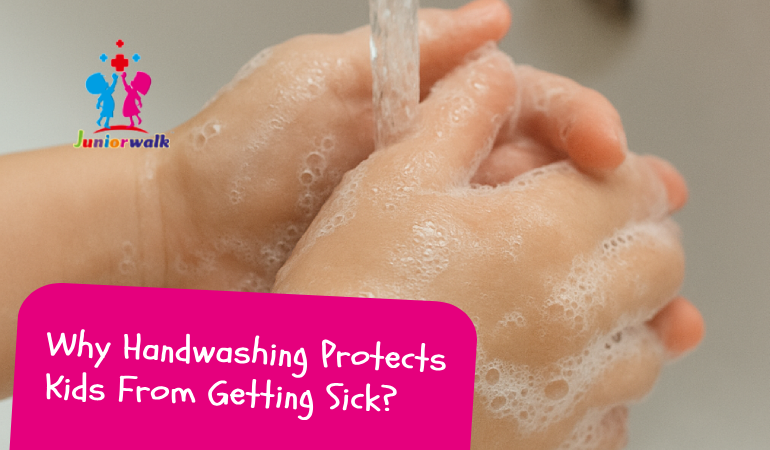
Salmonella, influenza virus, norovirus, and even the common cold virus are often transmitted by contaminated hands. Soap functions by dissolving the outer layer of germs, thus making it easy to cleanse them in water. This helps prevent the entry of infection via the mouth, nose, or eyes. Handwashing eliminates millions of microbes that children can come into contact with during the day, as long as it is done properly, for at least 20 seconds with soap.
3. Prevents Common Childhood Illnesses
Washing hands has been shown to reduce the risk of the most prevalent infections, particularly among children who have high contact with germs in the classroom or childcare facilities. Through proper hand hygiene, one can help to prevent:
- Respiratory infections such as colds and flu
- Stomach infections, which lead to diarrhoea and vomiting
- Eye infections such as Conjunctivitis
- Skin infections spread through touch
4. Kids Immune Systems Are Still Growing
The immune system is not fully developed in children, hence they are susceptible to infections. Any minute contact with germs may readily incite fever, cough, cold, or stomach ailments. Washing hands serves as a protective barrier to decrease the number of infectious organisms entering the body while also allowing natural immunity to develop gradually and safely.
5. Handwashing Breaks the Chain of Transmission
Bacteria are fast spreading, particularly among children. One child touches a toy, the other picks it up, touches their face, and the infection goes on. This transmission process is prevented by handwashing. By washing their hands upon leaving the playground, before lunch, and after using the toilet, not only themselves but also keep others safe.
6. Schools and Public Places Increase Exposure
The schools are particularly prone to infection because children share stationery, sports gear, desks, and washrooms. Daycare centres require handwashing even more, as babies and toddlers usually come into contact with the same toys and surfaces. Education on the importance of washing hands helps to create a clean and safe atmosphere among all people.
7. Helps Build Lifelong Healthy Habits
When children are taught to wash their hands thoroughly, the practice remains with them even in their adult lives. It turns into a regular part of their daily routine when preparing to eat, playing, and going outside. This permanent practice eliminates the risk of infections not only during childhood but also in adult life.
8. Soap and Water Work Better Than Sanitizers
Hand sanitizers are useful in emergencies; however, they do not effectively remove dirt and grease as soap and water do. Sanitizers are not effective in killing many viruses, including norovirus. For children, especially the younger ones, who are likely to get visibly dirty, good washing with soap is the most appropriate defence.
9. Easy, Affordable, and Highly Effective
The major benefit of handwashing is that it requires no special equipment. Simple soap and clean water are sufficient to prevent severe diseases, avoid hospital visits, and minimize the transmission of infectious diseases. It is among the easiest health practices with long-term benefits.
Handwashing may seem like a minor everyday habit, yet to children, it is one of the most effective ways to remain healthy. Handwashing keeps children at home, school, and on the move safe by killing harmful germs, preventing infections, and promoting lifelong hand hygiene practices. Teaching children how to clean their hands properly and do it regularly will help them stay healthier and happier in their environment.